Meditations on Driving in Le Marche, Italy
I am a born-again driver. After what seems like a lifetime of being terrified by traffic and of absolute conviction that driving is simply not a skill I will ever possess in this lifetime, I experienced an automotive transformation a few years ago. It was nothing short of a spiritual conversion behind the wheel, largely assisted by our semi-independent, much-beloved Tesla car, and in a huge part due to the generous, patient support of my saintly calm husband. Now I enjoy driving, it cheers me up and makes me feel powerful and emboldened by a newly acquired menopausal wisdom that I have just as much right to occupy space, learn, and make mistakes like anyone else. I look forward to our holidays even more because I get to observe and meditate on the nature of driving in various countries.
Let me just put it out here: in Italy, overtaking is a sacred duty, probably even prescribed by the Pope and all the angels and the apostles. Tailgating and the consequent peer pressure to speed up and display arrogance and might on their otherwise excellent Autostradas (here’s looking at you, my beloved A14) are so contagious that even the meekest of drivers (me, let's not be mysterious here) very soon catches herself in the fast lane, haughtily calling other drivers "slowpokes" and hurling at them some other unmentionable insults in Italian, that still sound poetic and lovely, since they are in Italian. I would never say such words in any other language, you see, because modesty forbids. Indicating direction is strictly for the wussies, utterly optional, and by some wizardry you are supposed to know who lives where and who will turn where at what given moment. It is helpful that there are only near to 60 million people in Italy, so somehow you manage to predict their unsignalled, erratic turning and stopping. Because you see, if they do use the indicator light, then they have a peculiar habit of forgetting about it, and it confuses and wreaks havoc among the drivers behind them for hundreds of kilometres. So it is probably for the best that the indicator lights are left untouched after all. Nasty, dangerous things.
If you are still alive after a few hours of this maneuvering, there comes your prize: its historical majesty, the Autogrill. Born in the 1940s, from humble roadside beginnings, today it is an institution, and Italian highways would not be the same without giant, industrial-looking arches spanning the Autostrada lanes at frequent intervals. Inside the Autogrill, a culinary and epicurean heaven of choice that smells like your grandmother's kitchen if she were a master chef. They serve no-nonsense, hearty food, which in Italy is probably equivalent to at least 3 Michelin stars earned anywhere else in the world. I am a huge fan, and have some yellow ball core memories exactly from these shrines of pleasure. Pizzas, pastas, lasagne, melanzane alla parmigiana, and just for the sake of showing off to the foreigners, effortlessly made-to-perfection ribs and French fries, or hamburgers with fries. Autogrills are places for families, and even the pickiest of children eat with gusto there. Would recommend for a last meal, let alone for a brief stop while driving. Autogrills are iconic.
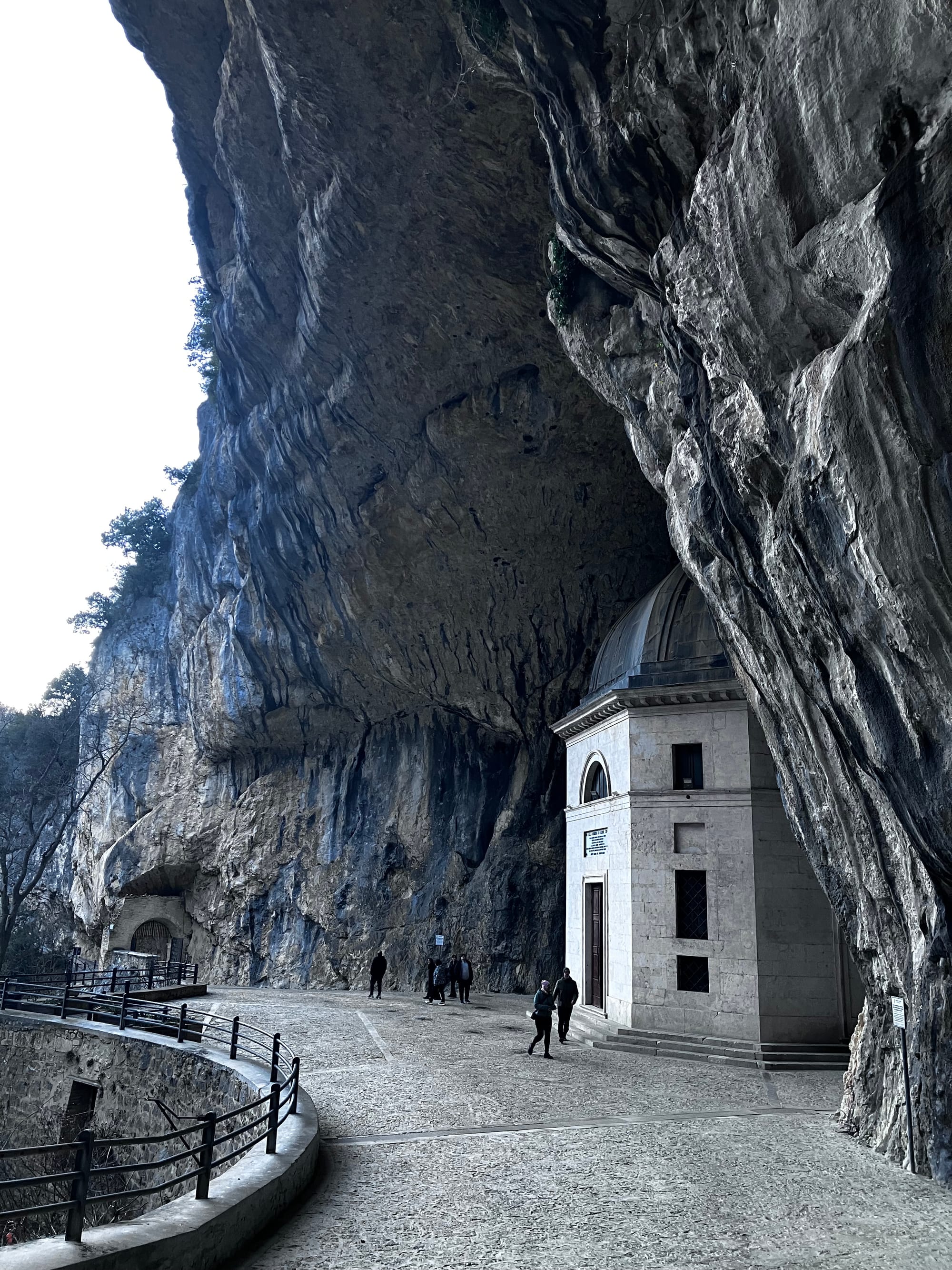
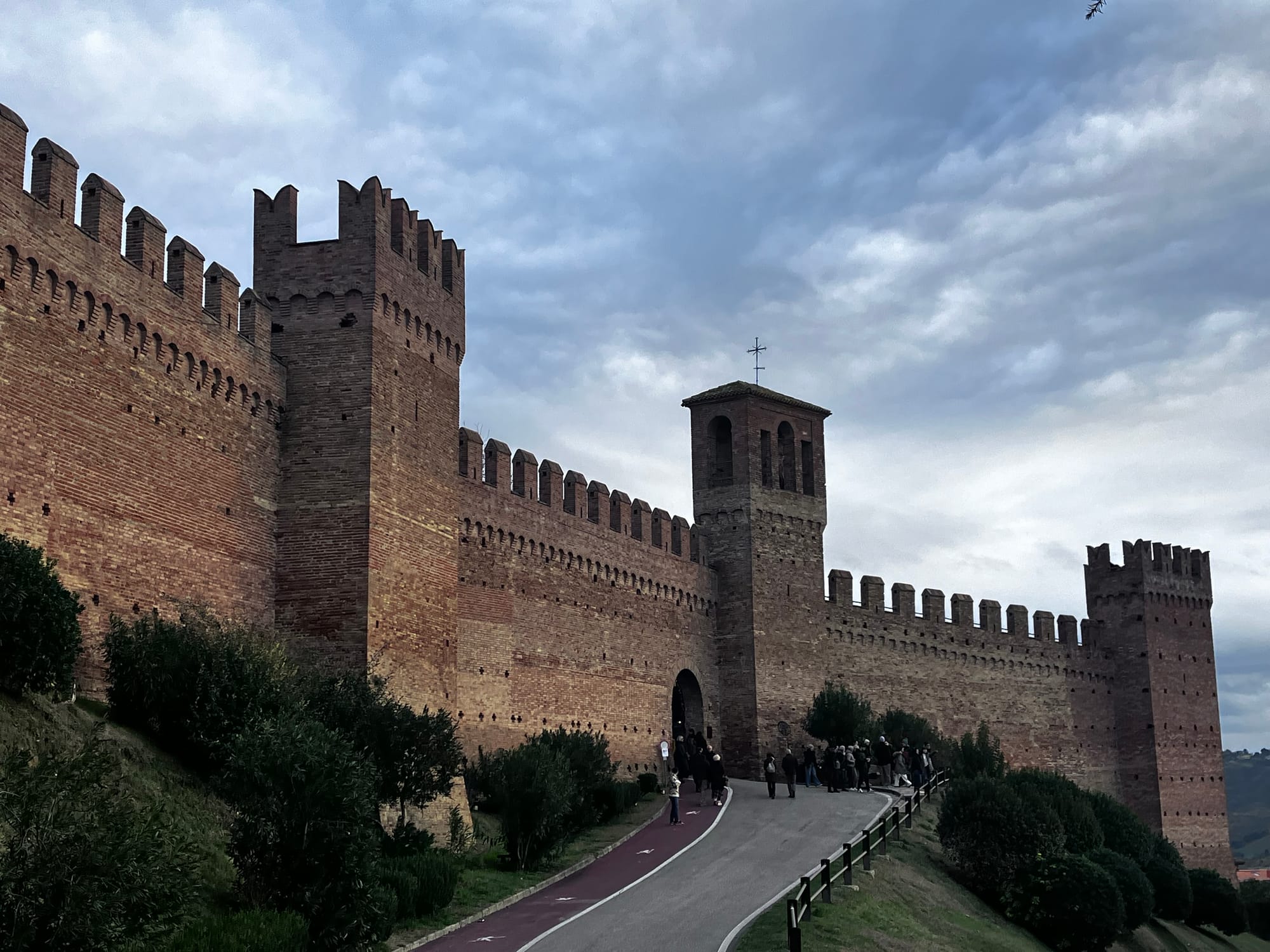
But I digress. Back to our car and to the gladiator games of speed, where you also learn quickly that the biggest mistake would be to underestimate small cars and the light speed their drivers can achieve. We were driving from Piedmont towards a previously unexplored area on the Adriatic coast in central Italy, called Le Marche. The only region that is in plural, meaning borderlands, and far less popular and fashionable than its celebrated neighbours, Umbria and Tuscany. Plural suits Marche in every aspect, it is a varied patchwork of hills and beaches, traditions, dialects, foods and crops. It all merges into an alchemy that is Marche. Arriving and driving there offered its own unique joys, since Marche is a place full of hilly drives, unexpected curves, narrow medieval streets built for horse carriages, not cars, or dear Lord please no, those monstrous SUVs. A three-wheeled Piaggio Ape, which means "a bee” is the light vehicle just one step above a Vespa scooter, that seems the most prudent choice there. There are side roads that disappear or dwindle into muddy farm pathways, there are tight spots such as low and narrow Roman arches that you must drive through, and my personal favourite: grand oak trees showing you the direction. You have only yourself to blame if you can't read…oakish. Because you see, Le Marche does not participate in the modern life that asks us to always be optimized, in manic hurry, overachieving, or having it all. Le Marche consists primarily of tiny borghi, rural hamlets located on the hill, more often than not fortified and dating back to the Renaissance or even earlier times. They are peaceful, scenic, charming, and they are visible from far away because their imposing castles, towers, or walls have been keeping guard over the surroundings for eons. So, an arrow on an ancient oak will do. You will find them.
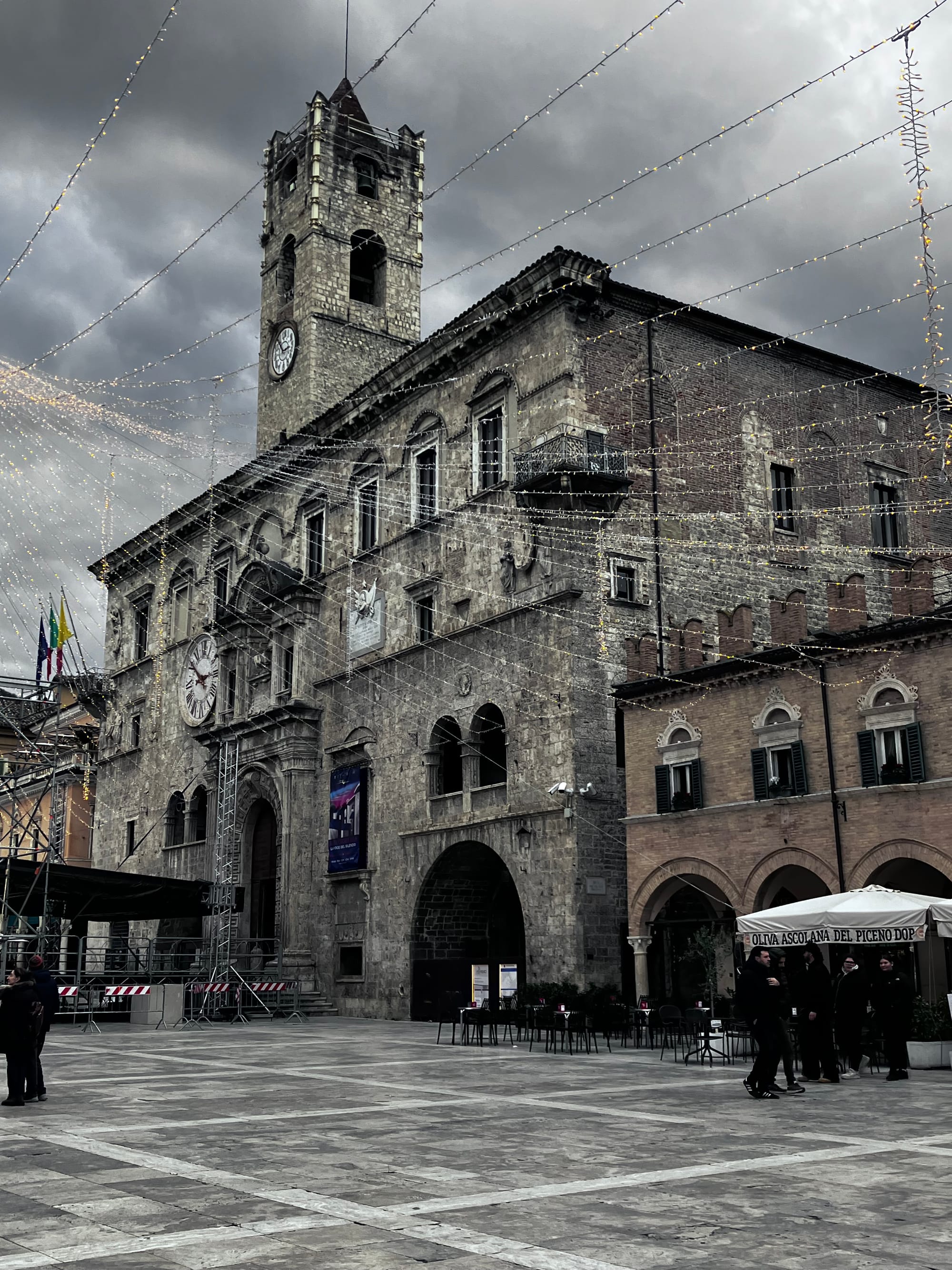
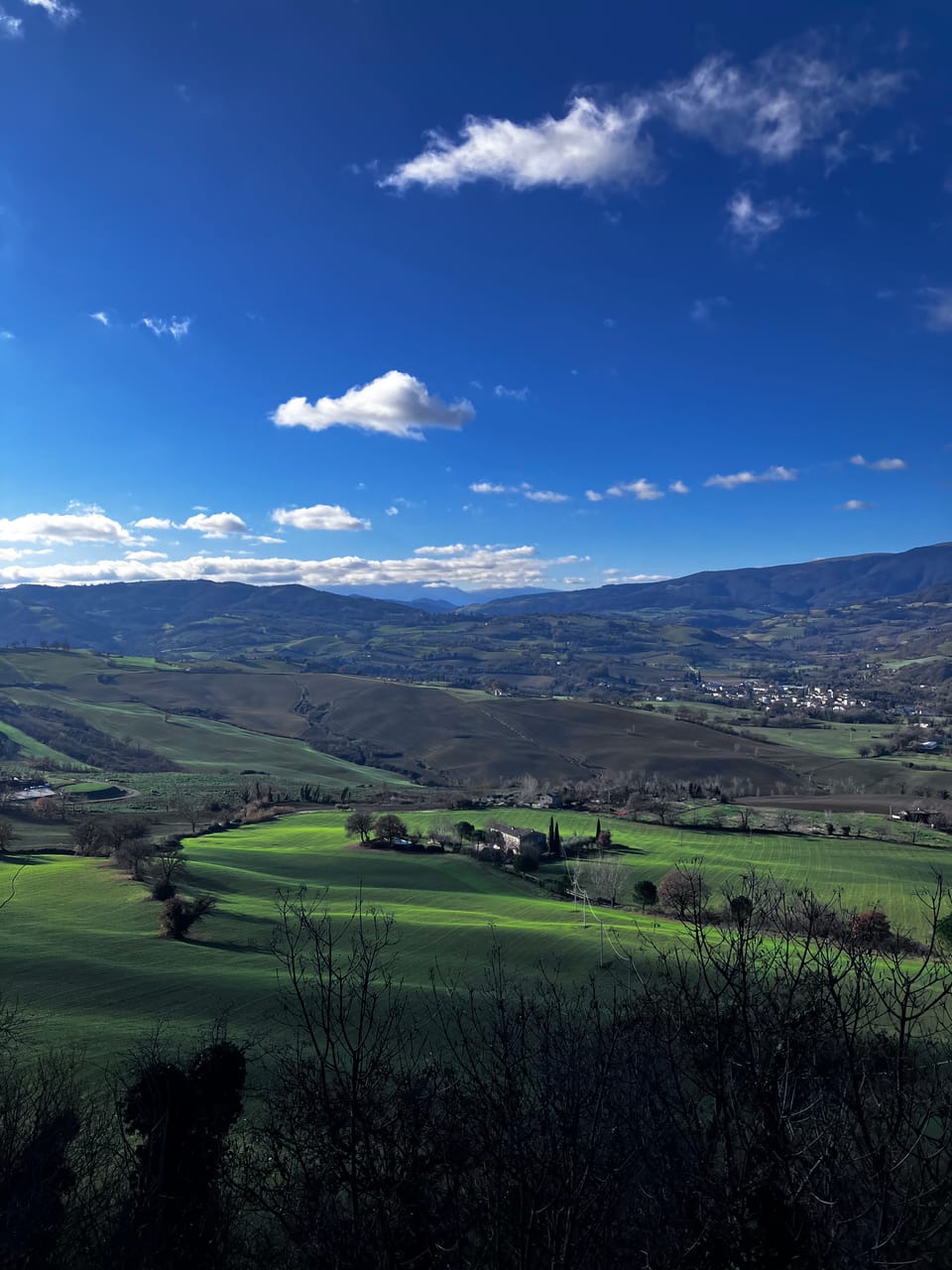
In one such miniature village, at the end of a winding street, we have decided to spend the last days of 2025 and our winter break. It was a small village where perhaps only a handful of old people live permanently, and the place was sleepy, quiet, and it gave us the best sleep hygiene that we had in ages. I woke up and went outside with a teacup in hand, and observed the bountiful view. The cluster of stone houses overlooked the greeniest imaginable terrace, with endless views of rolling hills, cultivated fields, cypress trees, and an occasional lonely farm that looks like an oasis of tranquility and of healthy life choices. Don't visualize a dainty English cottage from a Beatrix Potter story, as the Italian grandeur obliges a farm to have at least twenty windows to merit its name. I took in the olive groves, broccoli trees, the rare blue patch of a swimming pool extravaganza, while the bells of a neighbouring church were tolling in the distance. The promise of a magical day ahead of us under the lavish winter sun of 14 degrees Celsius rolled out like a carpet beneath us. The seductive music of village names around you. Madonna della Sole, Trecastelli, Corinaldo, and further towards the sea, the faint outline of Riviera della Palme. I can always rely on Italy to give me an out-of-body experience.
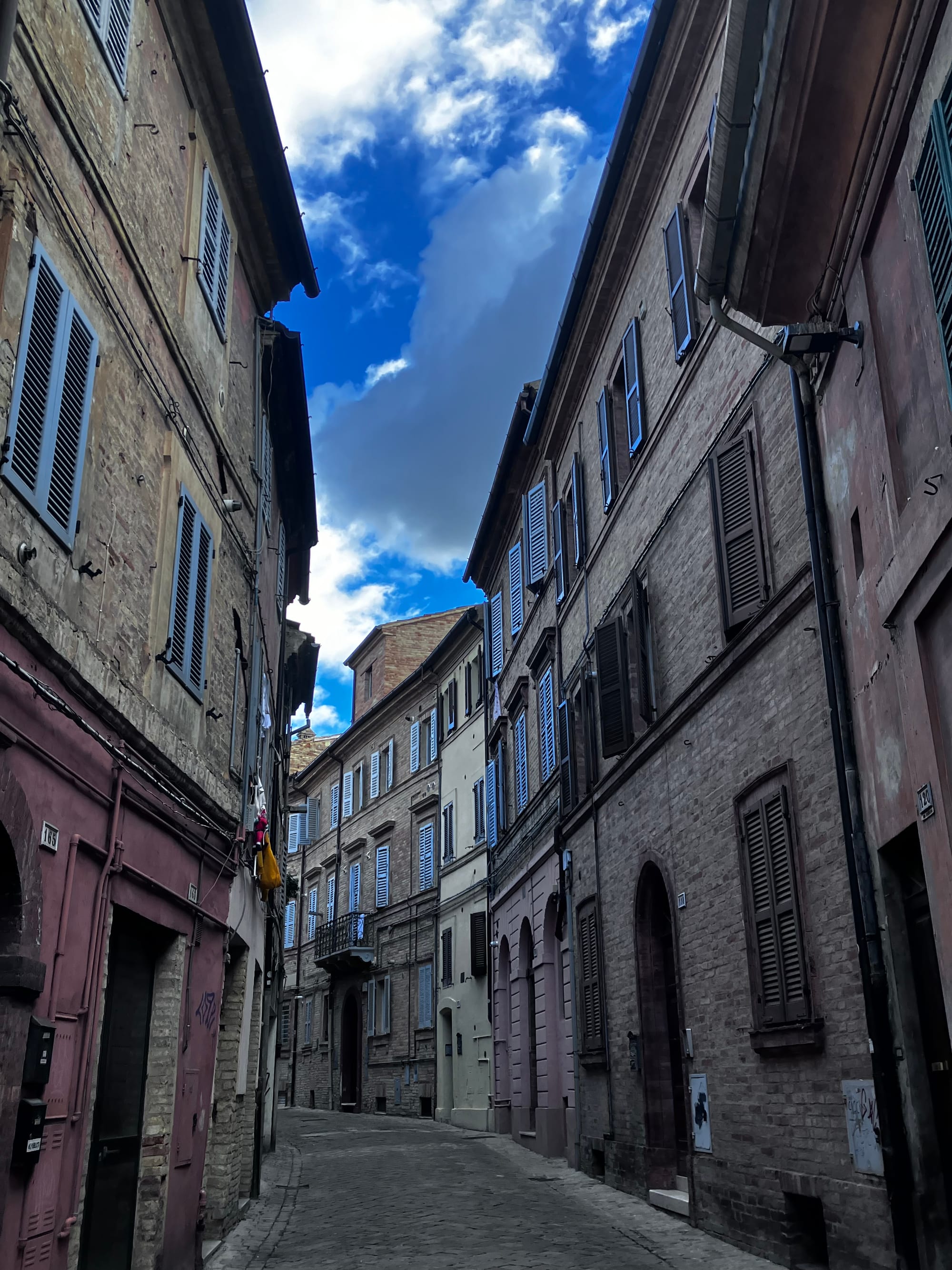
The hamlet had no grocery store, post office, or even the simplest medical facility or pharmacy. But it had a pizzeria that was apparently so exquisite that it boasted numerous patrons every night, willing to drive and come there from all around the region. You've got to respect that willingness of the Italians to go out of their way for a great restaurant. The food of Marche is tasty and simple, with lots of earthy wine, lentils, stuffed olives, meaty pastas, and crescia, a triangular bread stuffed with unpronounceable local salami and cheese. Respectively, Ciauscolo and Casciotta, that sound like star-struck lovers from a Dantean elegy. They were both much appreciated by our family.
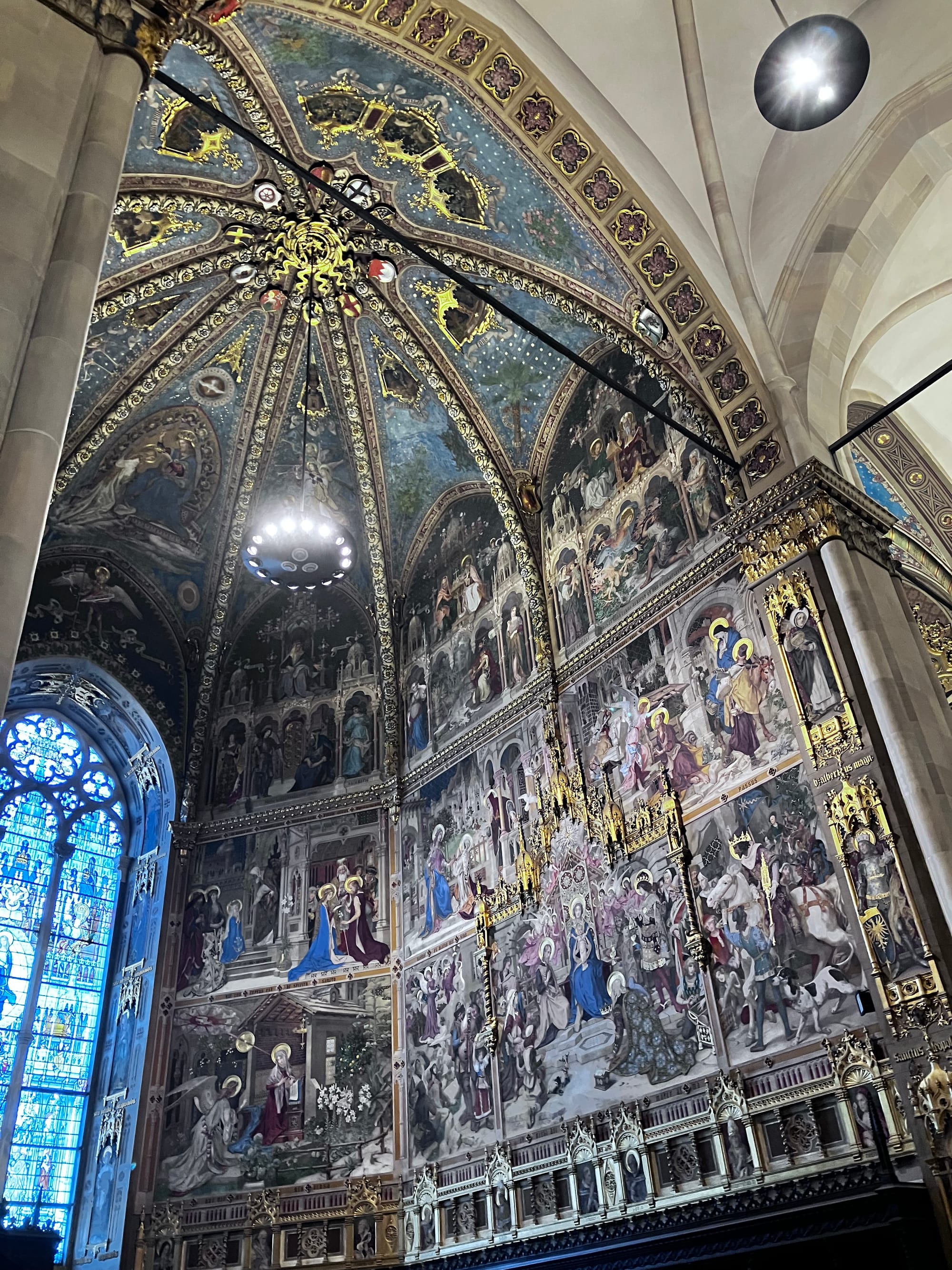
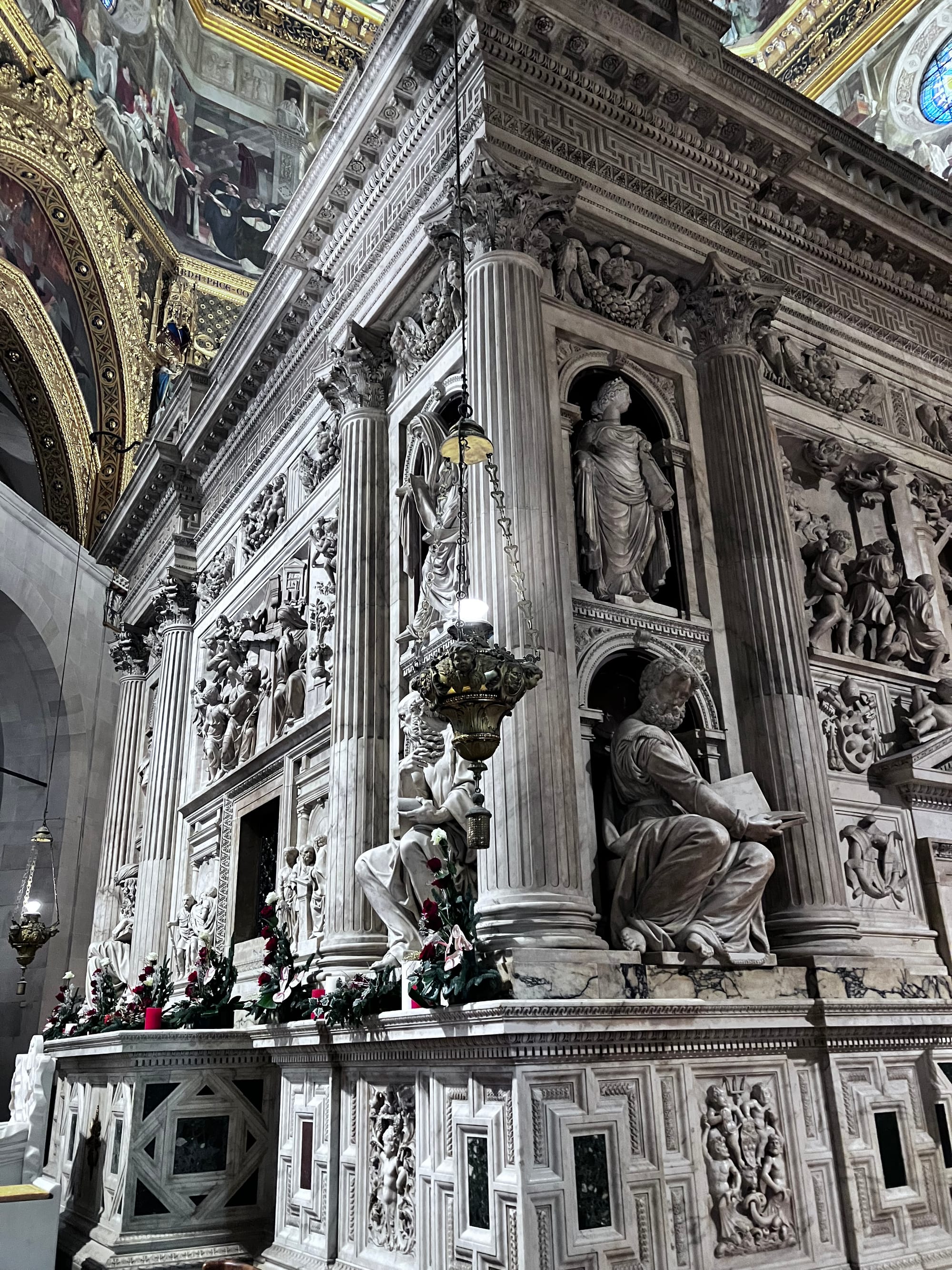
This bountiful region gave birth to some of the most distinguished artists in the world. The most distinguished sons of the region are Raphael Sanzio, painter, architect and the cornerstone of the High Renaissance, as well as the greatest Italian Romantic poet of the 19. century, Giacomo Leopardi. Visiting Marche can also be a pilgrimage, a trip to pay respect to the artistic heritage and master artists. For those who prefer their pilgrimages in a more literal sense, there is the splendid city of Loreto, where the yearning for possession of holy relics achieved a new level. Not a strand of hair, a piece of a holy bone of a saint, or, as anecdote has it, a vial with a holy breath of Saint Joseph, that might satisfy a smaller church, but only a complete house of the Virgin Mary would do for Loreto. Before we jump to conclusions that we might encounter something out of Architectural Digest, let's say that the centuries that passed left their mark, and what you see are the three blackened walls. The face of the Madonna of Loreto is also black, as God intended it to be, and no amount of scientific explanations that the darkness of colour comes from the smoke of candles in a closed shrine will dissuade me. Virgin's home is believed to be transported from Nazareth by angels, or by a ship, as some Doubting Thomases would have it. The devotion of countless pilgrims, their earnest muttered prayers, their genuine hearts that want to believe, always move me, no matter the truth.
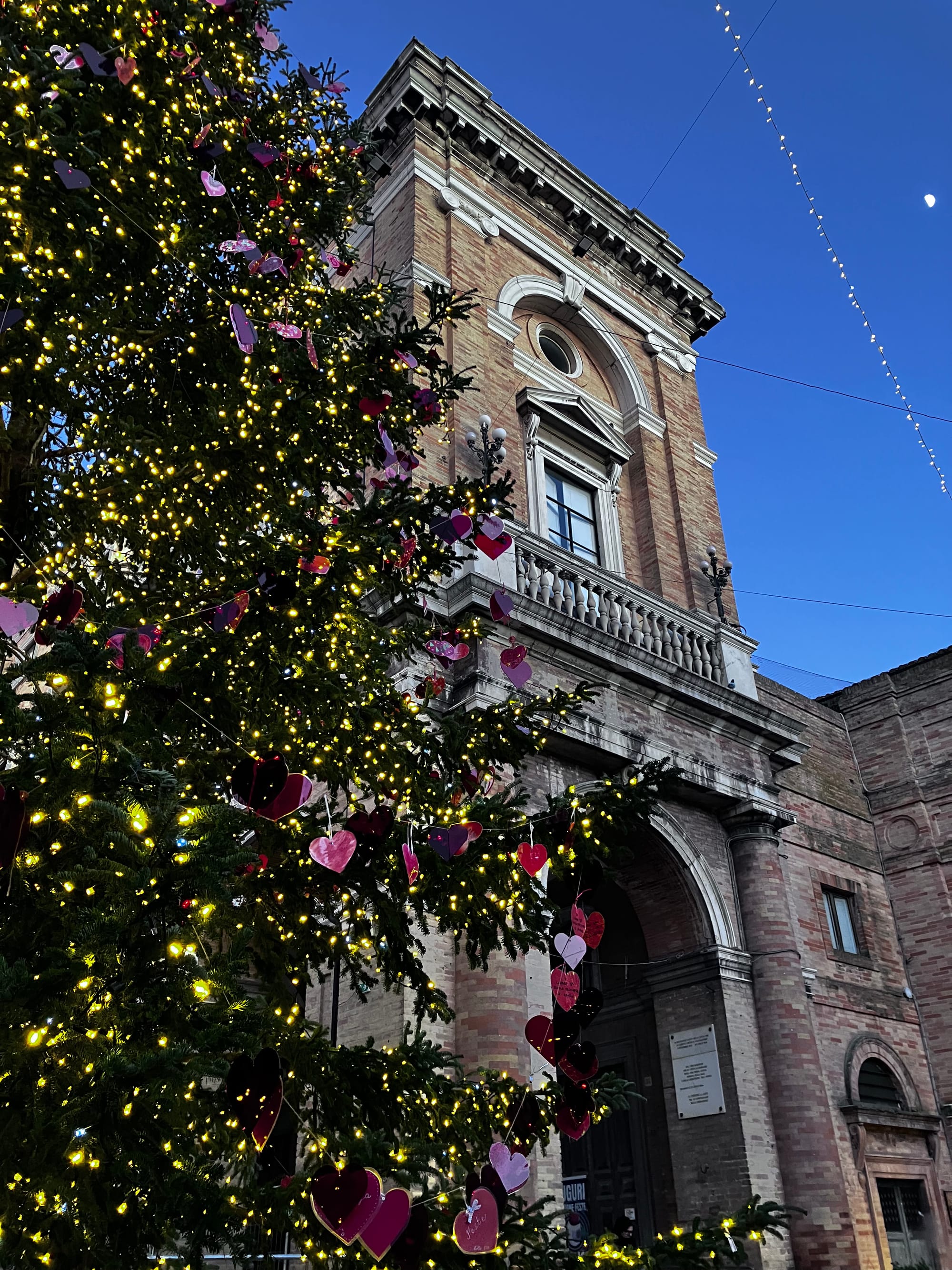
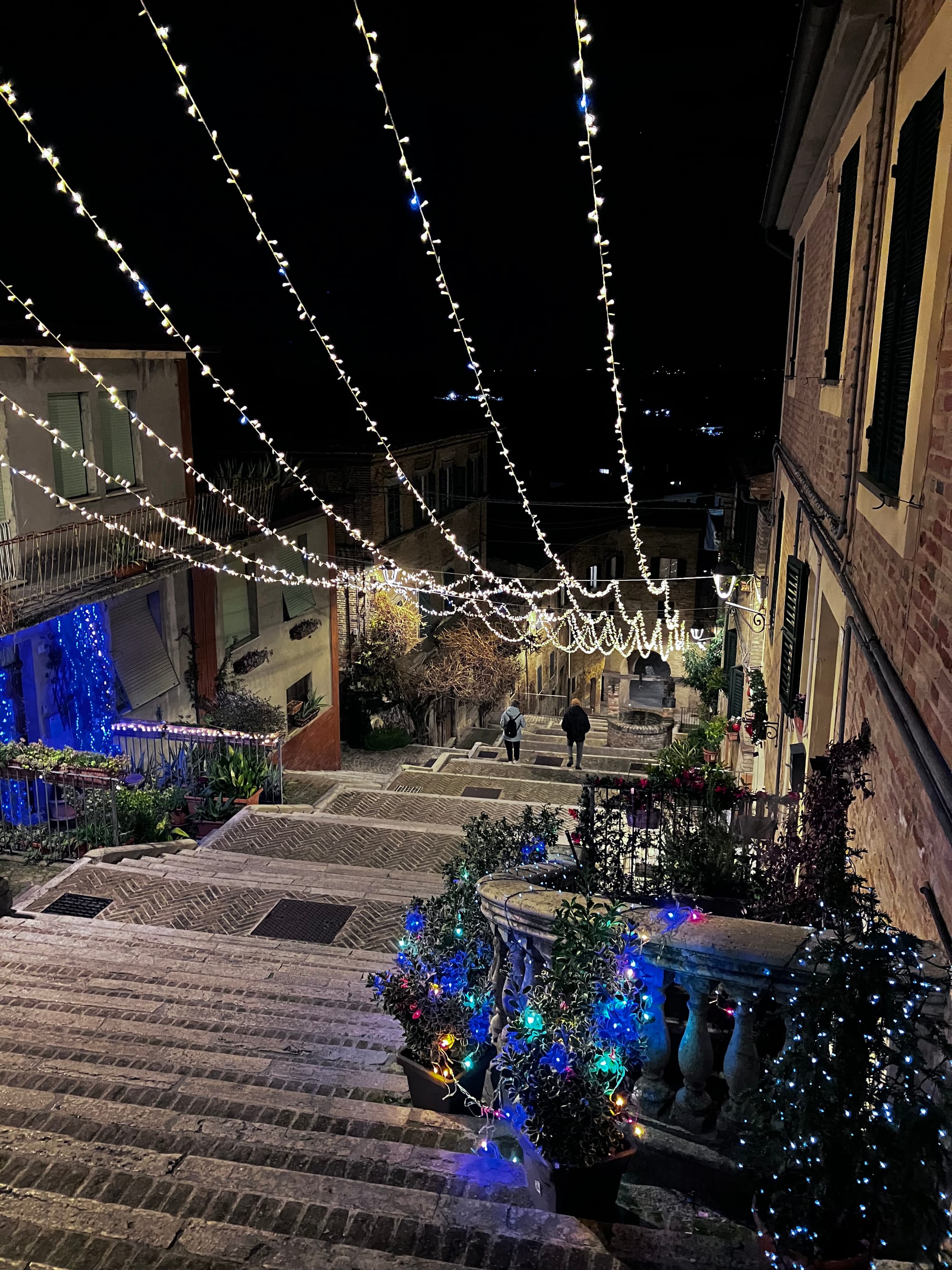
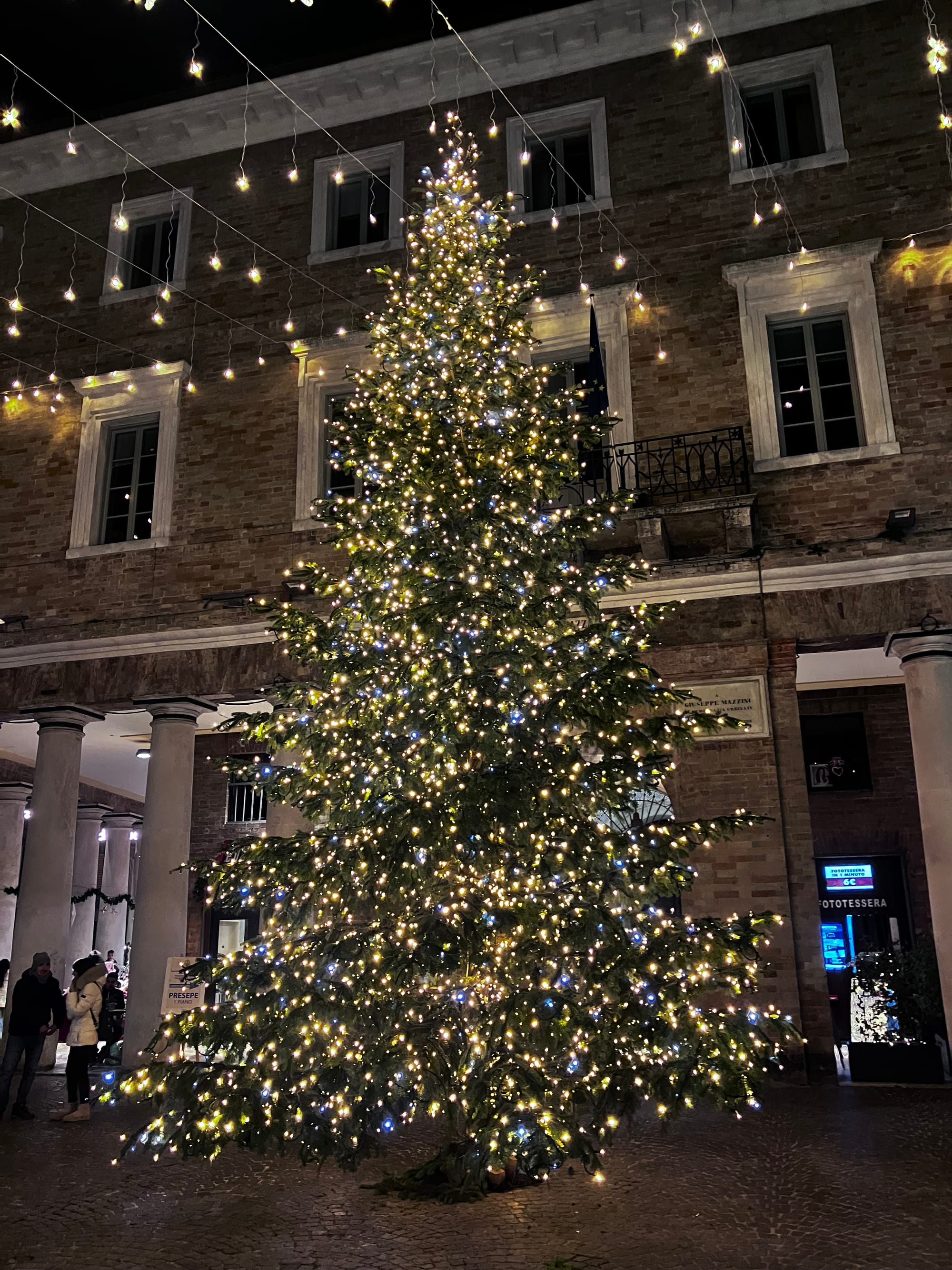
Urbino welcomed us with its warm stone colouring, medieval dignity, and the youthful energy of a university city. There is a central fountain towards which everyone converges, meandering streets all dazzling with Christmas lights adding to the magic, charming piazzas, countless tasteful shops, restaurants, and the imposing cathedral, flanked by the National Gallery that would easily hold its own on the Museum Mile in New York. The weather and the quality of light are effortlessly finer here, when compared to so many other parts of the world. If I did not know better, I would think we were in Arezzo, Tuscany, but with the far lower price and with infinitely fewer tourists.
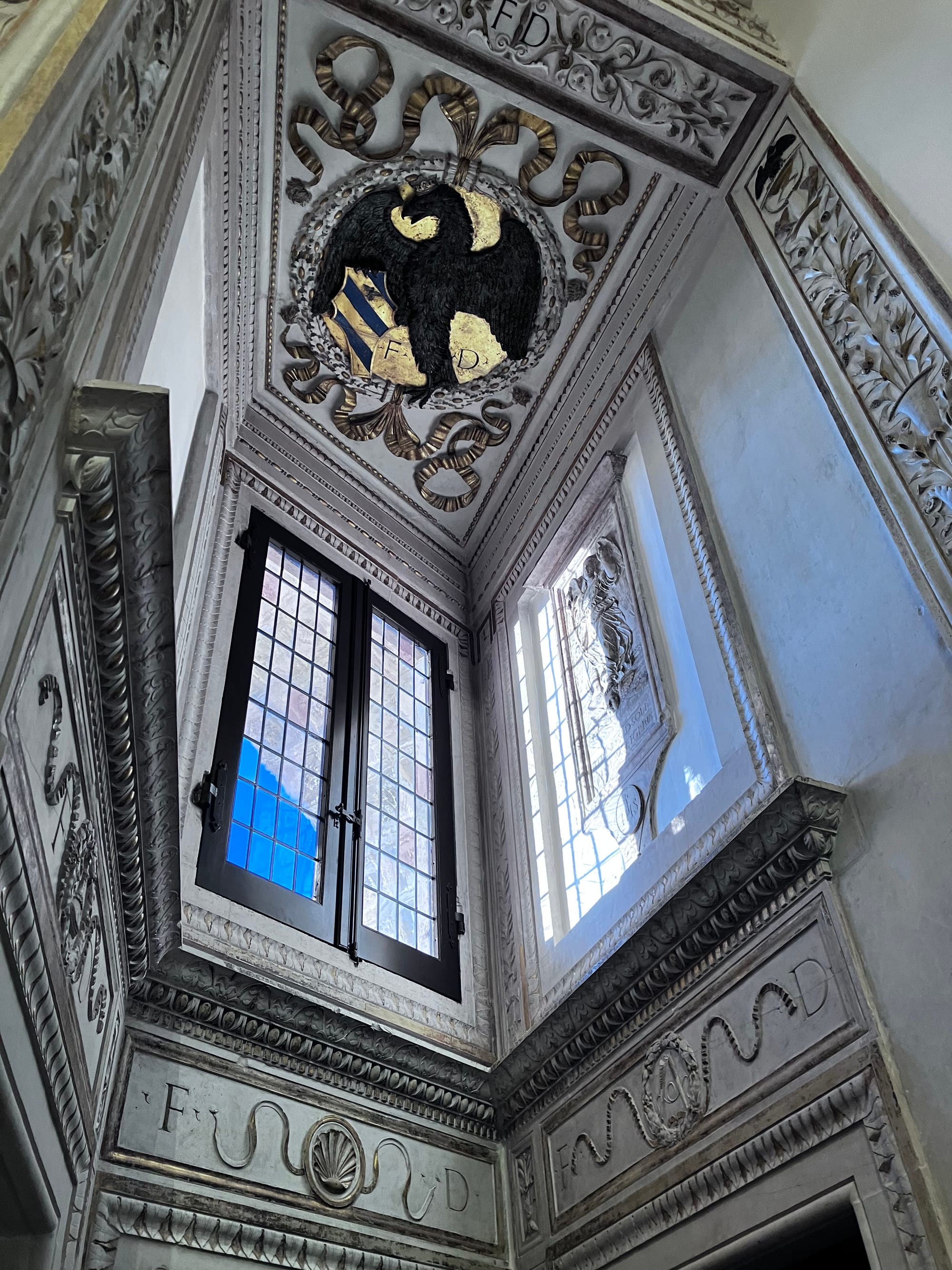
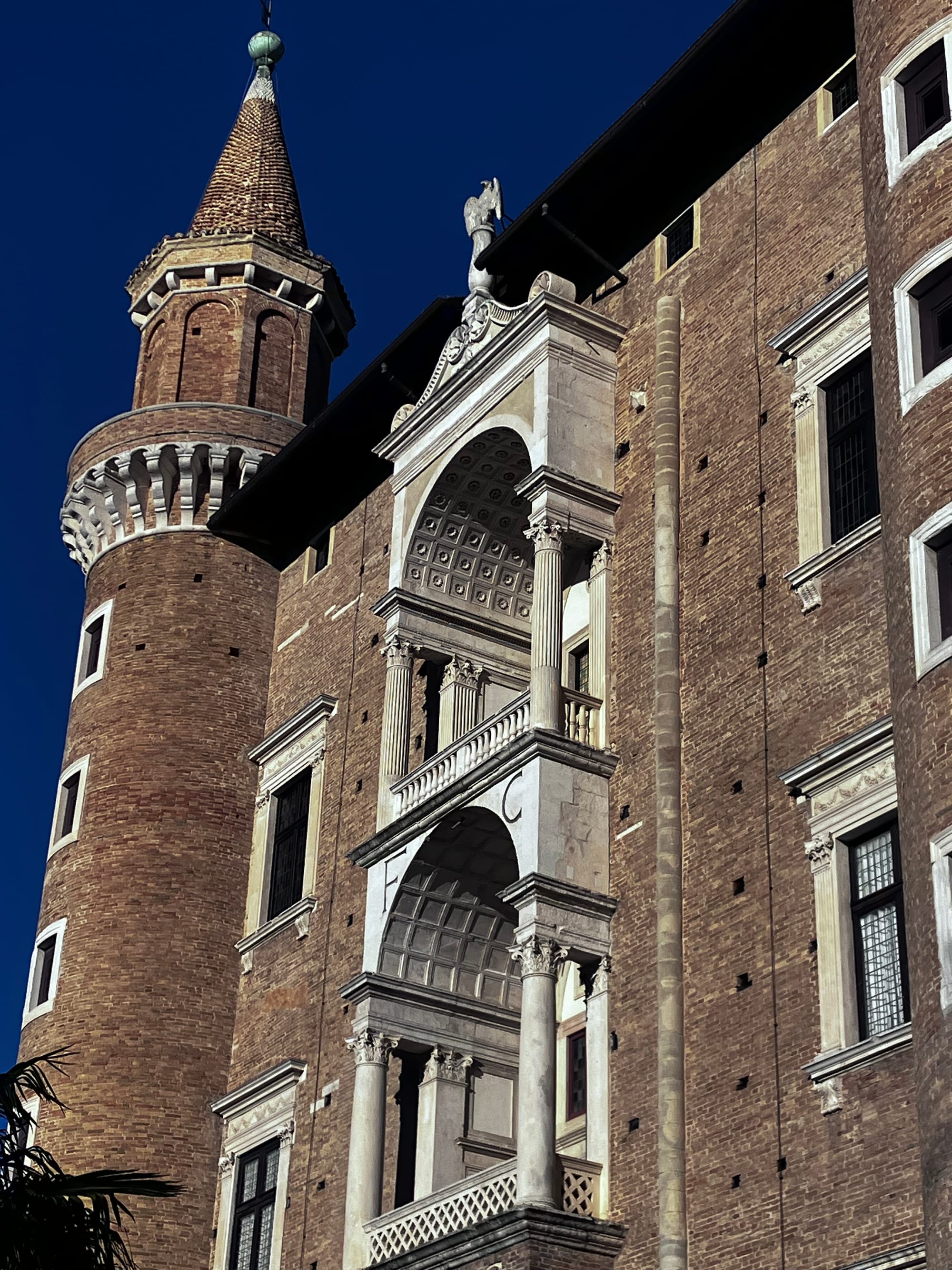
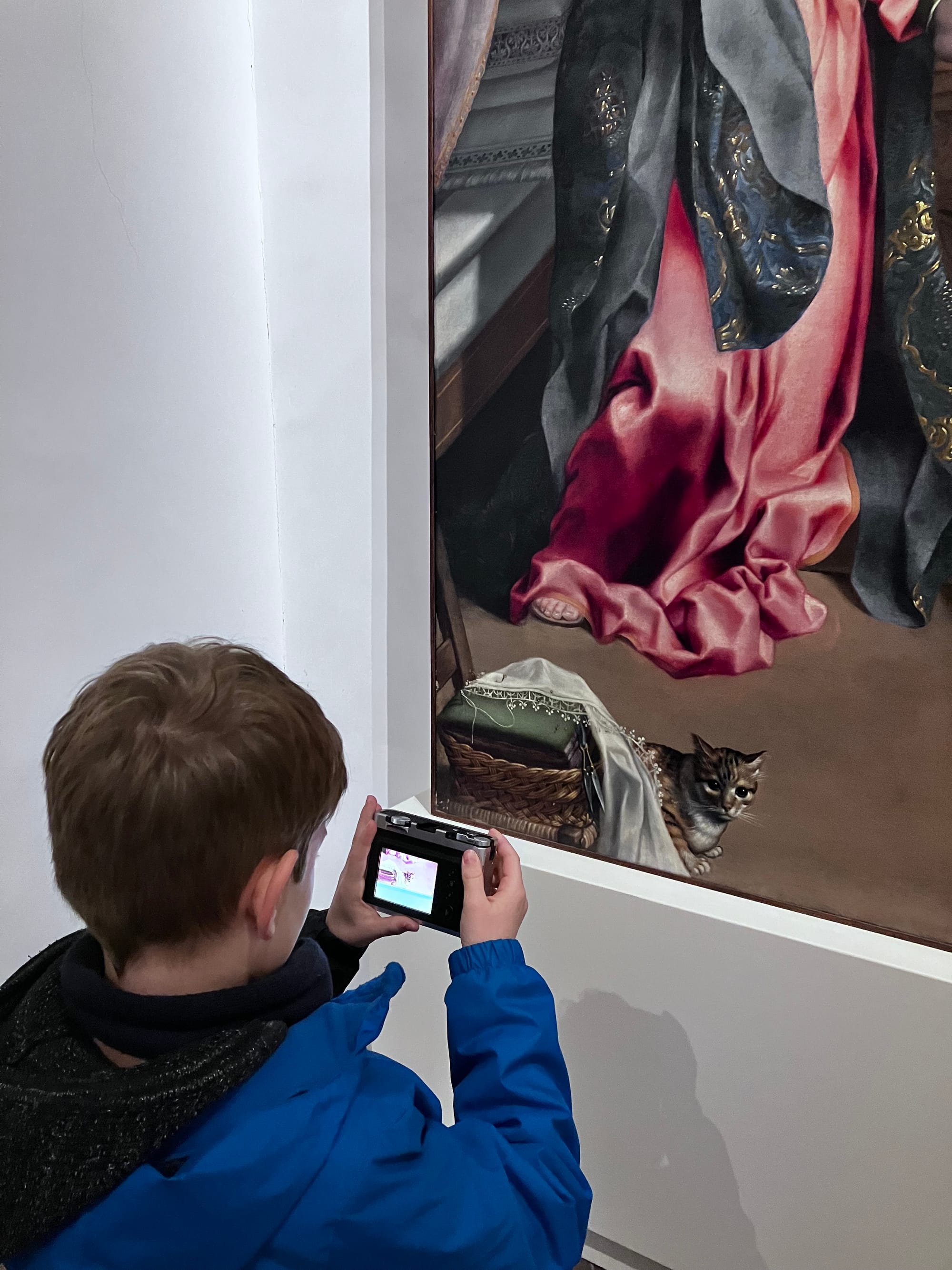
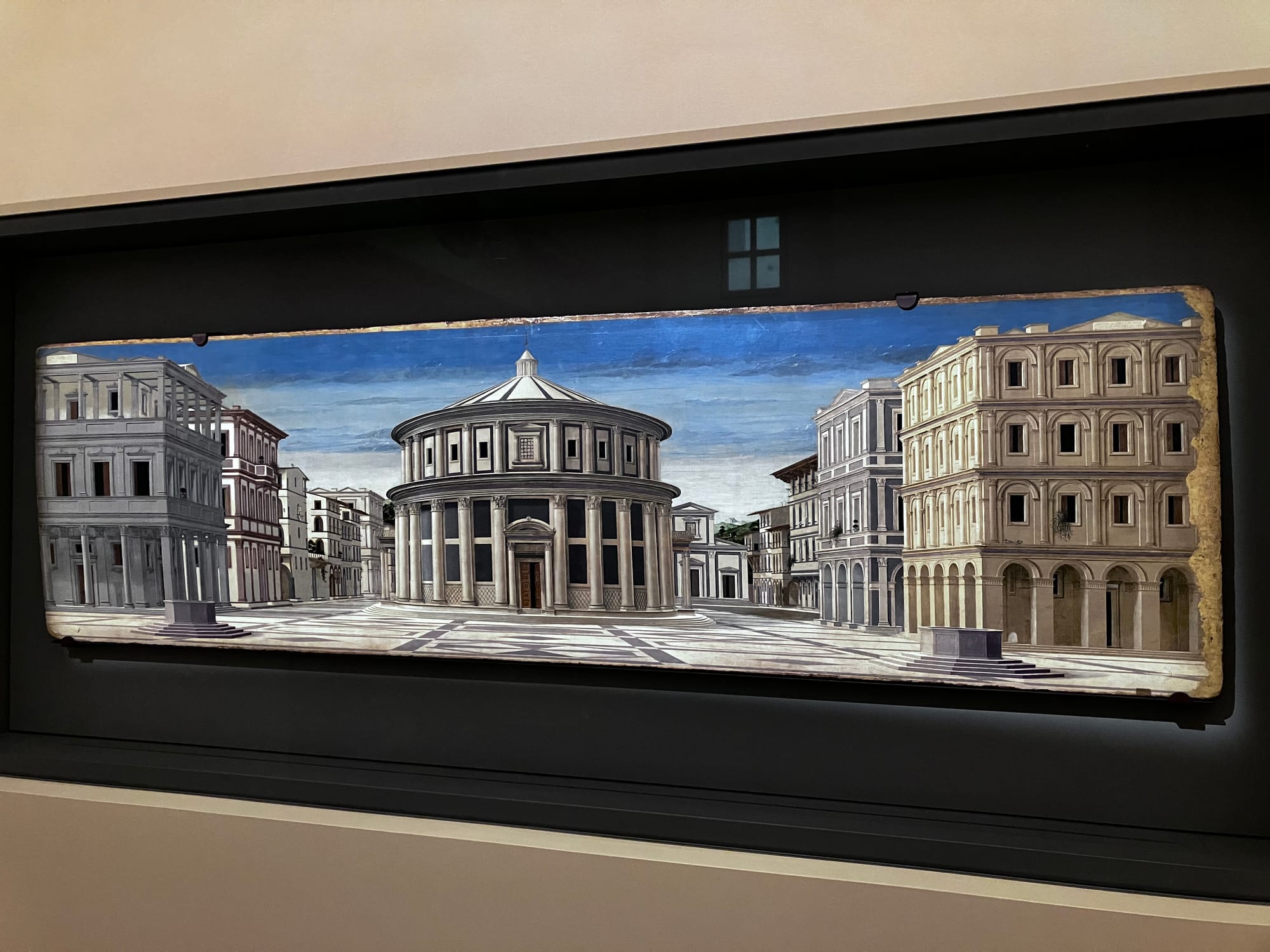
Urbino may not be known to foreign tourists like Florence, Rome, or Venice, but it is associated in the minds of Italians with the utmost importance in art, literature, architecture, and humanism. It gained prominence during the Italian Renaissance when a powerful ducal family set up their court there in the 15th century. It is a city for culture lovers, antique enthusiasts, the seekers of atmospheric nostalgia for the bygone eras. Side by side, inside the National Gallery of Urbino, I have seen the works of Raphael, his father Giovanni Santi, Tintoretto, Piero della Francesca, as well as many anonymous masters and artworks, such as the celebrated The Ideal City. I have seen the enigmatic Flagellation of Christ by Piero della Francesca, and Raphael's dignified La Muta, which I highly preferred to Mona Lisa.
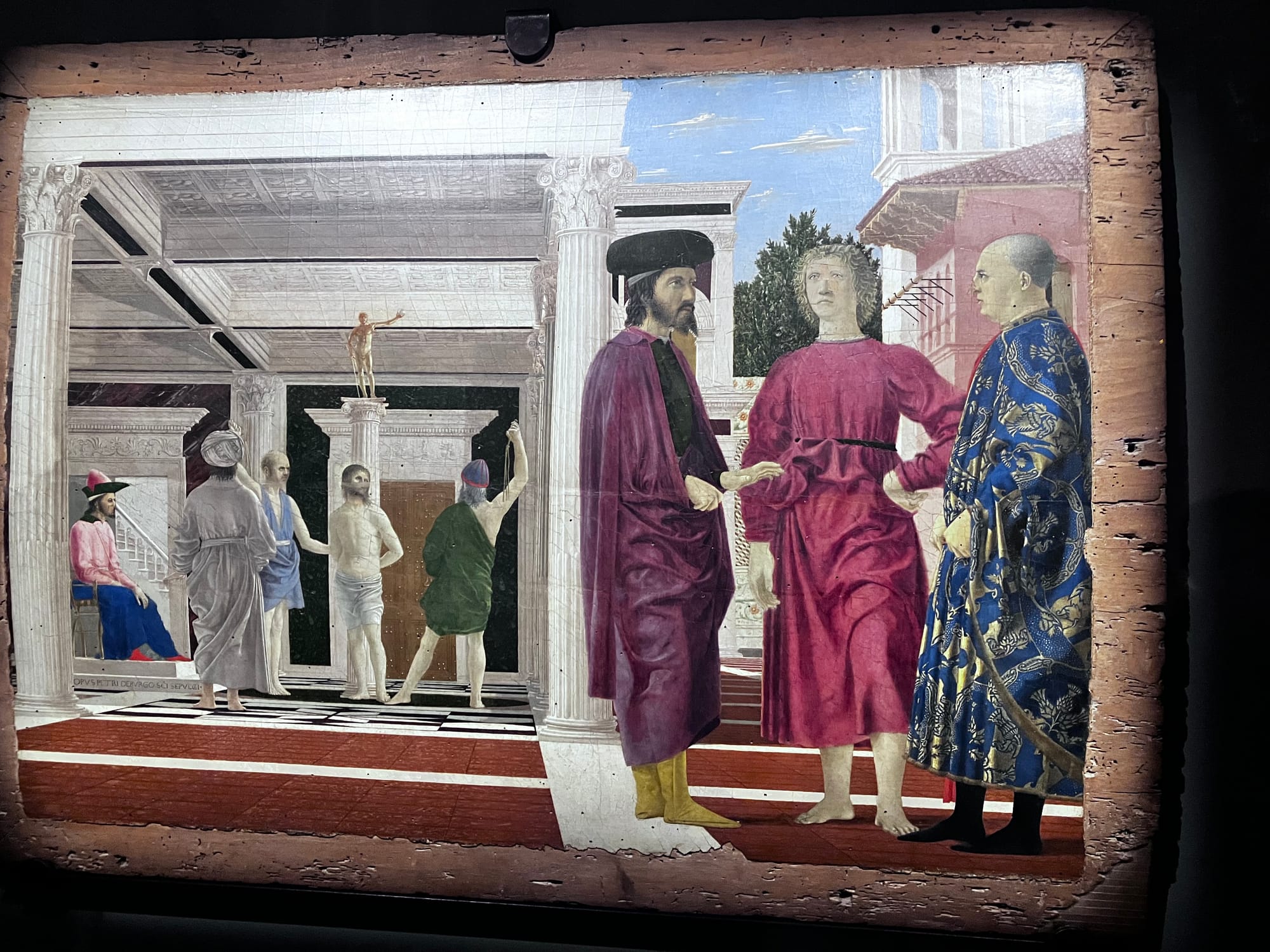
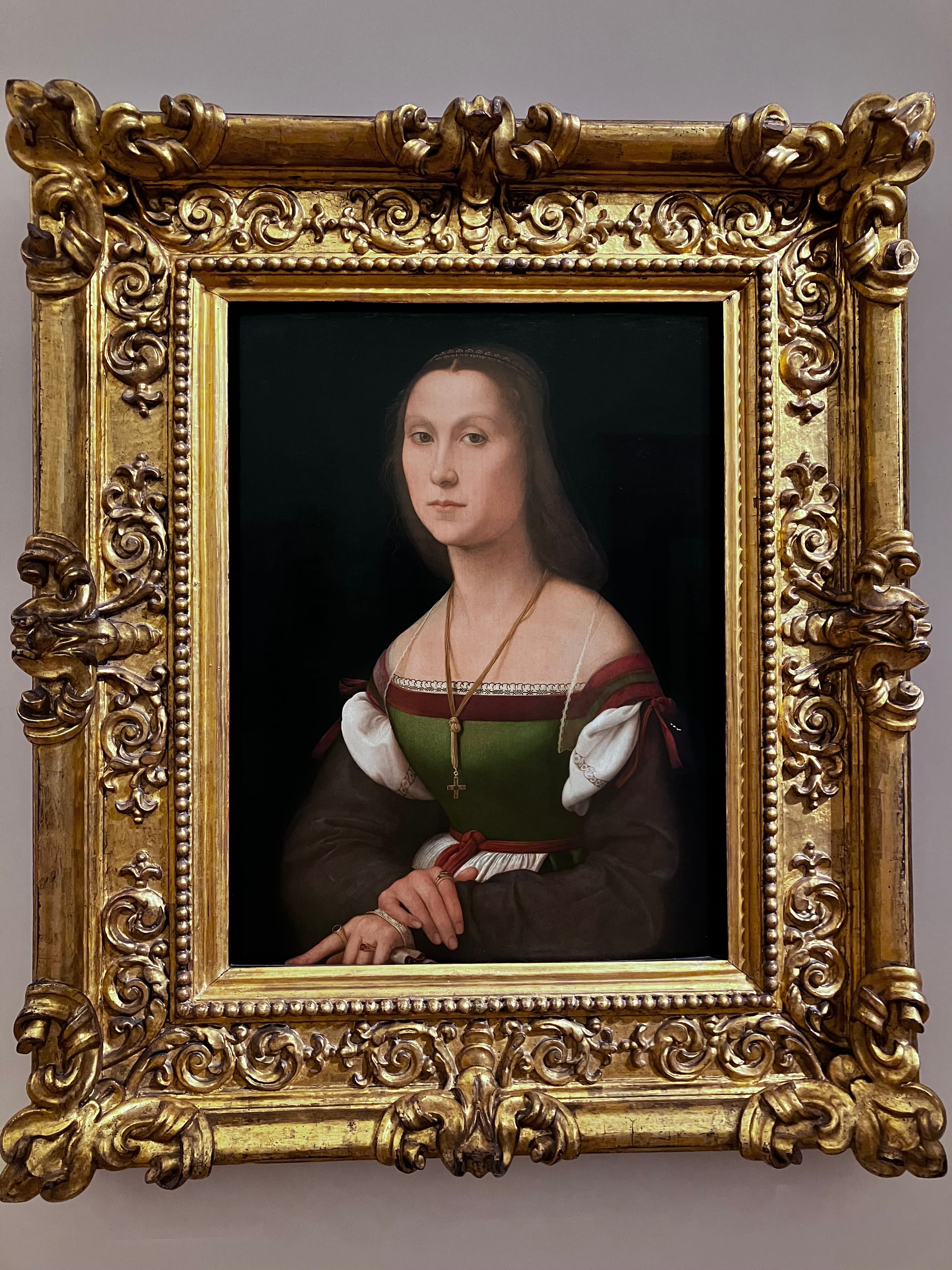
Such a fabulously sophisticated city might be considered an easy mark, a low-hanging fruit that is easy to swoon over and dream of longingly during a never-ending winter in the north of Europe. But in the Marche, even the smallest of places pack the same punch. We fell hopelessly in love with Corinaldo, a tiny village of steep cobblestone streets and with a quirky polenta well that, legend has it, once saved the villagers from starvation during a siege. We found a bakery where we could imagine ourselves coming every day for a cappuccino and a fresh pastry treat. We mentally already moved in, settled in one of the ancient houses there, partially hidden by the branches of the persimmon trees.
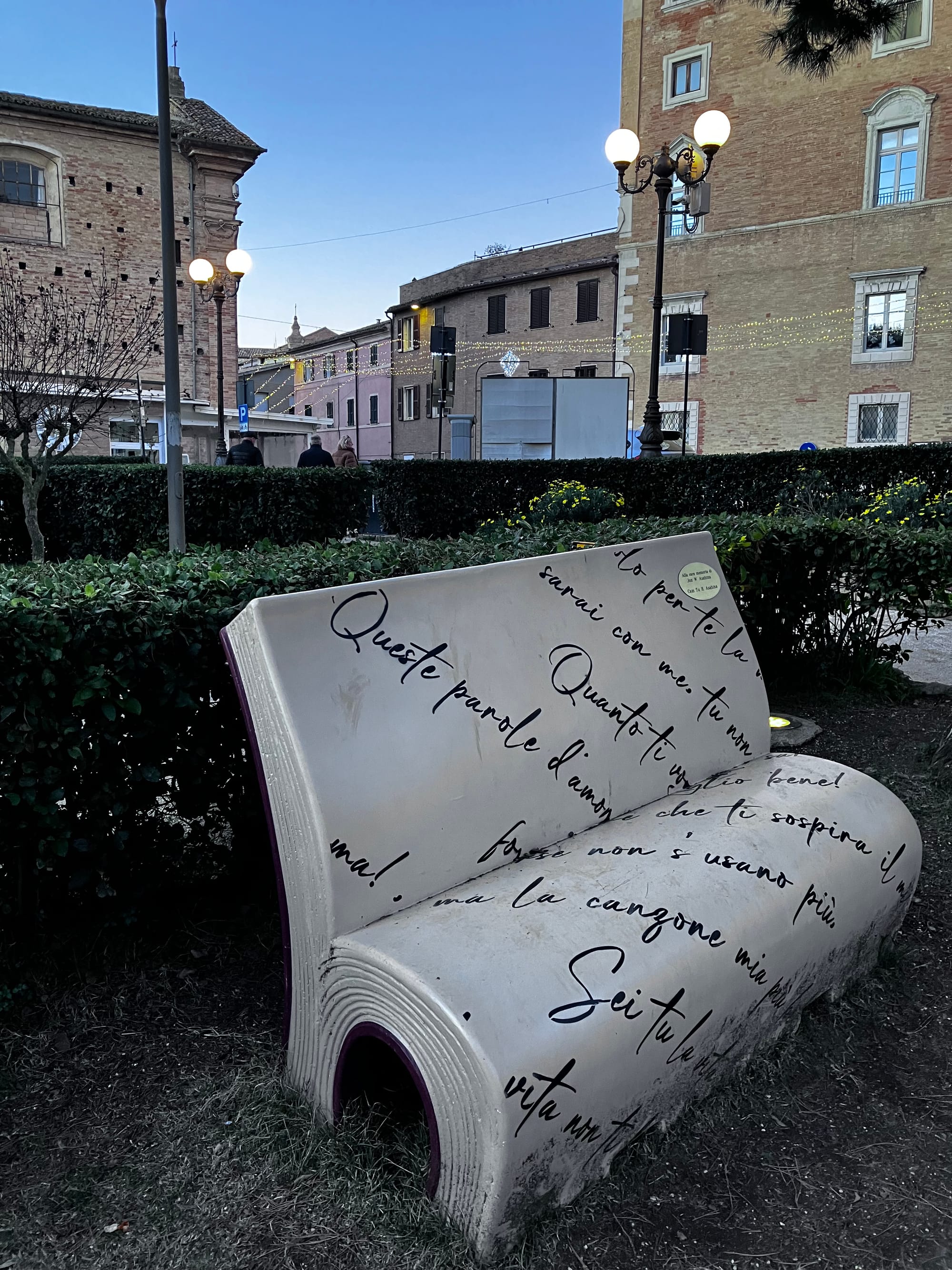
Recanati was even an easier love at first sight. How could I not adore the city that uses its narrow medieval streets to retrace and celebrate the life of a poet, a philosopher of the human condition, and its most famous son, Leopardi? They say that no one is a prophet in their own country, but the inhabitants of Recanati haven't heard of that, apparently. Every corner, every little square bears significance in the poetic history of their genius neighbour, a frail aristocrat whose poetry is melancholic, romantic, philosophical, full of unexpected perspectives on life, nature, and our place in the world. There is his solemn statue on the main square, restaurants and shops are named after his immortal poetry, Ginestra, Silvia, The Infinite…There is his birth home, this is the house of his beloved, over there is a memorial plaque with the inscription of the lines from his touching Il sabato del villaggio. The anticipation of joy and the disappointment of reality, the eternal truth set into the cadence of a poetic metre. If you are saddled with the misfortune of being born a genius, you'll do better if you get yourself born in Italy than anywhere else. I said what I said, and Recanati is my core argument.
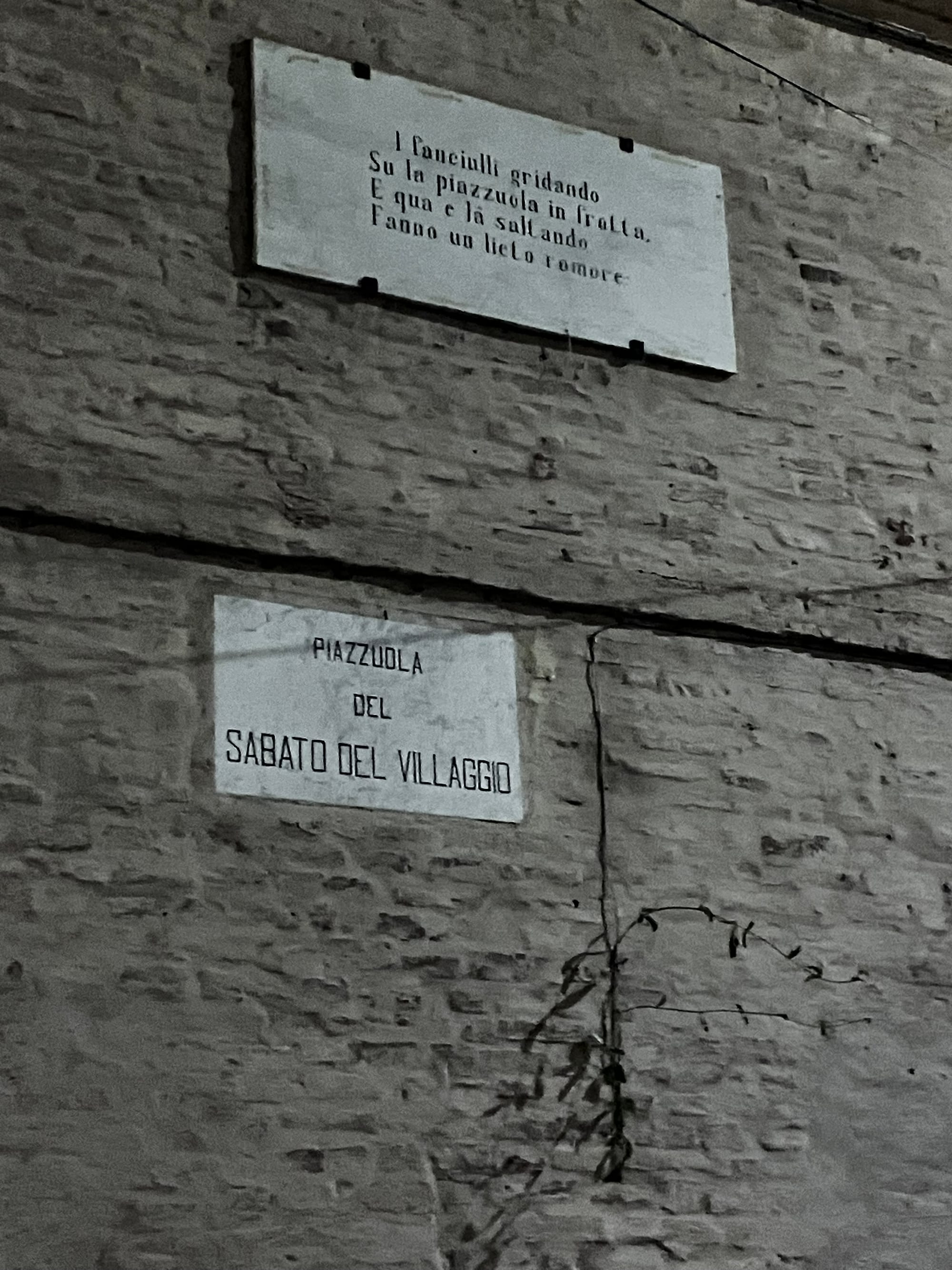
Once I heard an art professor amusingly say he was born a Protestant, but declares himself aesthetically Catholic. Surrounded by all that beauty, art, and history in Marche, I realized that in the same spirit, I was not born Italian, but I am aesthetically one of the staunchest Italians ever. An Italian not by nature but by nurture. The joy of being alive, the talent to live the full life, their cultural abundance, their grandeur, impeccable taste, immersion in art, attention to detail, beauty, and finer things in life that are far more important than functionality, these are the crucial tenets of my personal faith, too.
On the drive back, my husband shared his view on the driving philosophy of Italy. He referred to the (in)famous Mezzogiorno line that separates Italy into two parts, the north and the south. It is a geographical divide, roughly under and above Rome, but more importantly, it is a division with deep historical, economic, and cultural roots. In Italy, they feel it so deeply, and viscerally attach values, behaviours, prejudices, and mentality traits to it. You should not feel surprised if Italians on the opposite sides of the line feel more communality with the people of, say, Nigeria, than with one another.
Consequently, in the North they might respect the rules a tad more, but they drive too fast, they are anxious, busy, and lead very rushed lives that translate into their driving style. In the South, they will drive slower, since they are more relaxed and take everything easier, but with complete disregard for the man-made nuisances like respecting the right of way, colours of the traffic lights or signs on the road. Either way, my life as a born-again driver would be much easier if they would just indicate their turnings. Feel free to insert the Italian expletives of your choice here.